

About Daman and Diu

The second smallest union territory in India, Daman and Diu, is located near Gujarat in India. Daman in India. Daman lies on the Gujarat coast while Diu is an islet in the southern fringe of Kathiawar peninsula. It is bounded on its north and south by Bhagwan and the Kalem Rivers respectively, on its east by the Gujarat state and on its west by the Arabian Sea.
Diu lies in the Gulf of Cambay near Veraval Port and is separated from the southern extremity of the Saurashtra peninsula by a narrow channel running through a swamp. The island is connected to the mainland by a narrow channel on the north. Daman has a mild and humid climate while Diu has a sultry climate. It has no subdivisions. The Daman region is under the charge of a collector while Diu is under the charge of a civil administrator.
History:
The history of Daman and Diu dates back to the 13thcentury when the region was a part of the Chowda Rajputs who were defeated by the Waghalas who in turn were thrown out by the Muslims in 1330. The region was ruled by the Muslim rulers for the next 200 years. Finally the Portuguese took charge over the land in 1534 and ruled over it for a period of more than 450 years. Later several attempts were made by the rulers of Gujarat to drive out the British but all attempts were futile. In 1559, Daman was finally annexed by the rulers of Gujarat. The inquisition which was established in Goa, largely contributed to the downfall of Portuguese Empire in the east.
Under the Constitution (Twelfth Amendment) Act 1962, Goa was included in the first schedule of the Indian Constitution as territory of Indian Union. By the 57th Amendment of the Constitution Daman and Diu was separated from Goa to become an independent union territory. In 1987 Daman & Diu was pronounced a union territory by the constitution of India.
Demographics:
The total population of the union territory of Daman and Diu is 2, 43,247. A variety of people constitute the Daman and Diu population. The density of population in Daman and Diu is 2169 per square km. The sex ratio is 618 females per 1000 males.
The total population of the union territory of Daman and Diu is 1, 58, 059 A variety of people constitute the Daman and Diu population.
Of the total population of 1, 58, 059, 65, 581 are females and 92,478 are males. The total number of people who dwell in the urban regions of Daman and Diu is about 36, 26% of the total population. One of the most significant aspects about the population of the place is the national urban population of 25, 7%. The density of population in Daman and Diu is 1411 per square km.
The rate of literacy among the population of Daman and Diu is quite high. The rate of literacy in the union territory is 81, 09 % of the total population of the place, The rate of literacy among the male population at Daman and Diu is around 88.40% of the total population.
The population of the place is not very different is character from that of the neighbouring state of Gujarat. Both these places have similar traditions, customs and ways of life, The ceremonies, social functions, rituals and customs that are prevalent among the people of the union territory are mostly associated with the religion of Hinduism and are widely practise in Gujarat.
Most of the people who live in this union territory of India use the Gujarati language, the major religions of the region are Christianity. Hinduism and Islam.
Geography:
Daman and Diu geography is actually the geography of its districts which make up the union territory. The district of Daman is situated on the Indian west coast. This place is bordered by a river called Kalem on its south, a river called Bhagwan on its north, the Arabian Sea on its west and the district of Valsad on its east. The Damanganga River divides the Daman district into two parts. Three rivers, namely, Bhagwan River, Damanganga River and Kalem River pass through this district.
Daman and Diu – Geography and History reveals the topographical and historical features of the union territory. It is the second smallest union territory of the country, second only to Lakshaweep. Initially a part of Goa. Daman and Diu achieved its independent status of a union territory in the year 1987.
The union territory is a conglomeration of the regions of Daman and Diu. The two regions are bordered by the state of Gujarat. The small island of Diu is located near junagadh which is part of the Saurashtra Peninsula. It is joined by a creek to the state of Gujarat. The region of Daman is located near Surat which is part of the state of Gujarat.
The union territory of Daman and Diu is spread over an area of 112 square kilometres. The union territory id divided into two districts of Daman and Diu. Gujarati and Marathi are the two languages that are spoken by the people in these parts. The total population of Daman and Diu is 1, 58 059 out of which 92,478 are males and 65,581 are females. The union territory has achieved a good literacy rate of 81.09 percent.
History of Daman and Diu:

Daman and Diu history dates back to more than two thousand years. The region remained a part of the Lata Kingdom from the 2nd to the 13th century. The region was a part of Goa that came under the rule of the Portuguese in the 16th century. History of Daman and Diu reveals emergence of the region as an important political unit along with Goa. The region gained popularity after independence from the region of Surat unveil that the region was ruled by the Satrya Kshatrapas in the first century. The rule of the region passed to the Lata Kingdom which was one of the seven divisions of the Aparant or Konkan Vaishaya. Although the region was subjected to the rule of several dynasties during this period, the Lata Kingdom emerged as one of the most prominent rulers that dominated the history of Daman and Diu in the early centuries.
In the medieval period, the region fell under the rule of the Chowda Rajputs, Waghalas and the Muslim emperors. The Muslims ruled the region for more than two hundred years after which the region was captured by the Portuguese. The spice trade routes routes were seized by the Portuguese after the Battle of Diu in which they defeated the Muslims.
The Portuguese ruled the region for 450 years from 1510 to 1961. Goa achieved its independence from the colonial rule of the Portuguese in the year 1961. The state acceded to the Union of India in the year 1987. It was the same year that the region of Daman and Diu gained its status of a Union territory.
Battle of Diu:

Battle of Diu has a great significance in Daman and Diu history as its marks the establishment of the predominance of the Portuguese in the region.
The battle was fought on the Indian Ocean in the year 1509. The Portuguese arrived in the coastal region of Goa to facilitate in spice trade. The sea faring country faced opposition from the Muslim rulers who ruled over the region. The Portuguese established their supremacy on sea by defeating the Muslim fleet on the Indian Ocean. The Battle of Diu was fought on the ocean on 2nd February in the year 1509. With the defeat of the Muslims, the Portuguese established their dominance over the spice trade routes of Daman and Diu.
The Battle of Diu is and important event in the history of Daman and Diu as it marks the advent of the Portuguese regime in Daman and Diu that continued for the next four and half centuries.
Damania:
Damania refers to the congregation of people who settled in the region of Daman and Diu.
The stratification of the tribal according to their territorial segregation led to the establishment of the community of Damania. The Damania community is an important section in the study of Daman and Diu history.
The community of Damania evolved from the Dubleas who had settled in the state of Gujarat. The bigger community of the Dublas were segregated into the Valsadia, Damaina and Talavia. The Talavias areranked higher socially than the others. Damanias settled in the territory of Daman. They rose to be a class of gifted businessman. The people of the clan share the same title of Damania.
Various reputed personalities of India belong to the Damania community. Parvez Damania is one of the prominent figures in the aviation industry who hails from the same community.
Geography of Daman and a Diu:
Daman and Diu geography is actually the geography of the districts of Daman and Diu, which make up the union territory. The district of Daman is situated on the Indian west coast. This place is bordered by a river called kalem towards the south, a river called Bhagwan towards the north, the Arabian Sea towards the west and the district of Valsad towards the east.
The Damanganga river divides the Daman district into two parts. Three rivers, namely, Bhagwan River, Damanganga River and Kalem River pass through this district.
The district of Diu is located at a small distance away from the Kathiawar coast to the Veraval Port in the state of Gujarat.
It is located between 71’-00’-2” and 70’-52’-2” East longitudes and 20’-44’-3” and 20’-42’-0” North latitudes. The altitude of the district is 6 meters above the sea level.
The mainland of the district is linked with two bridges. Diu is bordered by Amreli and Junagadh towards the north and the Arabian Sea towards the other three sides.
Topography of Daman and a Diu:
Daman and Diu topography is a typical island topography, which does not exhibit a variety of landforms. There are a number of rivers that provide water to this union territory of India. Daman is one of the two districts of the union territory. Which is located on the Indian west coast. The place is bordered by a variety of topographical features. The district of Valsad in Gujarat state lies towards the east, the well known river called Bhagwan flows towards the north, the Arabian Sea is located towards the west and River Kalem flows towards the south.
The major river of the region Damanganga divides the Daman district into two separate parts. As many as three rivers provide water to the district. All these rivers flow towards the west direction. The river Bhagwan runs along the northern border of the district, the river Kalem runs along the southern border and the river Damanganga runs in between the other two rivers.
Diu is the other district of the union territory of Daman and Diu, It is a small island located at a small distance away from the Veraval Port in the state of Gujarat. The total length of the coastal region of the district is 21 kms.
The height of the district of Diu is 6 meters above the level of sea. The maximum altitude of the district is about 30 meters above the level of the sea. The landscape of this region is plain.
The Diu district also has land as well as water on its borders. It is bordered by the place called Junagadh and the district called Amreli in the state of Gujarat towards the north and the Arabian Sea on the remaining three sides.
Area of Daman and a Diu:
The Daman and Diu area is not very big; it is only 112 square kms. In fact, the union territory of Daman and Diu is the second smallest one in the country of India. Lakshadeep is the only union territory of India that has a smaller area.
The entire area of Daman and Diu is taken up by two different districts called Daman and Diu. Both these districts are located on the seashore. Both of them have borderlines with the state of Gujarat. The district of Daman is situated close to the place called Surat in the southern part of Gujarat. The district of Diu is located close to the place called Junagadh in the peninsula called Saurashtra Peninsula in Gujarat. The region of Daman is a small region in a small region in the Gulf of Khambhat. The region of Diu is connected to the the state mainland by a creek.
Government and Politics :
As per the Constitution of India, the administration of union territories is carried out by the administrator Similarly, in Daman and Diu the President of India appoints an administrator, but like the governor, he is not the head of the state. Few other officers assist him in carrying out his duties.
Economy and Infrastructure:
Fishing is the main economic activity. Mechanized boats and other requisites are being provided. For agriculture, the area under double crop is being increased by raising irrigation potential. Total area under irrigation is 517 ha. There are 550 industrial units in the territory. The total length of road in Daman and Diu are 191 and 78 km respectively. There are no railway stations and airport in this union territory.
The Daman and Diu economy is largely dependent on the small scale industrial units that the union territory is endowed with. Apart from industries, agriculture and tourism also contribute substantially to the Daman and Diu economy. A number of other ancillary sectors like real estate have also boomed in the developing union territory and effectively buttress the economy.
There are about 535 registered scale industrial units in Daman and Diu. Although these industrial enterprises are spread all across the union territory, the principal industrial belt is concentrated around the towns of Dabhel, Kadaiya, Somnath and Bhimpore. In order to aughment the industrial growth, a 1x10Kva 66/11Kva unit has been set up in the towns of Daman and Dalwada. Mechanical products. Chemical paraphernalia, electronics and electrical goods, plastic, rubber, pharmaceuticals, paper packaging, metallurgy and instrumentation industries have also mushroomed in the union territory.
Agriculture is the main source of livelihood of the people of Daman and Diu. Paddy is the principal cultivated crop. Besides paddy, pulses, oilseeds, groundnuts, ragi, beans, wheat, mango, sapota and banana are also grown aplenty. Almost 67% of the total land area of Daman and Diu (about 3727 hectares) is under cultivation.
Daman and Diu, being a popular tourist destination has a well developed tourism industry has also accelerated the growth of several auxiliary sectors like real estate and the hospitality industry. Several hoteliers and industrial magnets have invested in hotels, seaside chalets, bungalows and farmhouses in the union territory. The affordable land prices and the proximity to the Special Economic Zones have facilitated the development of the real estate sector.
Daman and diu Industries:

Daman Industries are the focal point of the thriving Daman and Diu economy. The puny union territory is burgeoning into a bustling industrial center and is spreading its wings to venture into newer territories. Mechanical products, chemical paraphernalia, electronics and electrical goods, plastic, rubber, pharmaceuticals, paper packaging, metallurgy, instrumentation, service as well as hospitality and tourism industries are the union territory’s forte. Consequently, a plethora of industries specializing in these sectors have mushroomed in the union territory. Amongst the mechanical industries in Daman and Diu. The automobile industry, bearing, cranes, cranes hoist lifts, cooling towers, brass precision components as well as industries specializing in diesel engine parts deserve special mention.
Air compressor spares, electrical accessories, computer peripherals and stationery, hardware, software, chilling plants, battery parts, capacitors, air conditioned coils, AC DC drivers, lighting luminaries and home appliaces are some of the other noted industries in Daman. Manufacturing units of chemicals, corks, breweries, distilleries, acids, dyes, cosmetics, agricultural pesticides and insecticides, chemical paper, carbon black, chemical powder, chemical textile auxiliaries are a host of other materials have also been established in Daman. Other industrial units that deal with the manufacturing of ayurvedic unani medicine and herbs, adhesives, tapes, molding material, building material, audio visual equipment, jute products and paper boards have also sprung up in the union territory. The hospitality industry has also made its made its mark and carved out a niche for itself in the popular tourist hub of South India.
Daman and diu Agriculture:

Daman and Diu agriculture is one of the principal sources of livelihood of its populace and contributes substantially to the Daman and Diu economy. Daman and Diu is the second smallest Union Territory of India, which remained a branch of coastal settlements on Arabian Sea coast for almost four centuries since the time of the Portuguese travellers. Daman and Diu are two separate segments, both on the sea side and enclosed by Gujarat.
In the district of Daman, several cereal crops are grown. The most important field crops grown are Ragi, groundnut, paddy, pulses and beans. Wheat is also an important crop. This union territory also grows and exports Sapota, Mango and Bananas. The net field area is about 3729 hectares which encompasses about 67% of the entire geographical area of the districts.
Daman and diu Real Estate:
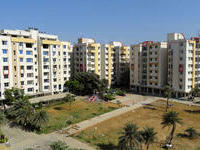
Daman and Diu real estate is one of the booming industries in the recent times that contribute substantially to the Daman and Diu economy. Goa, Daman and Diu were amalgamated into the Union of India as sovereign states and Union Territories. But, Goa was elevated to being a state, Daman and Diu became Union Territories. The populace of Daman and Diu mainly speak Marathi and Gujarati. Daman and Diu have turned out to be ideal seaside holiday spots. It attracts hordes of tourists all year round. The real estate and hotel companies have been quick to realize the importance of this Union territory as a source of revenue. Some important tourist locations in Daman and Diu include Moti Daman Fort, Devka Beach, Nani Daman, Jampore Beach, Damanganga Tourist Complex etc.
A large number of real estate companies and hoteliers have started investing large amount of funds in Daman and Diu. Seaside chalets, bungalows and farmhouses are in high demand. The land prices, which have skyrocketed in the neighbouring states of Gujarat and Maharashtra, are still within limits in Daman and Diu. Taking advantage of the proximity of Daman and Diu to Special Economic Zones (SEZs), these companies are engaged in multiple projects for both the Government and Private parties.
Daman and diu Tourism:
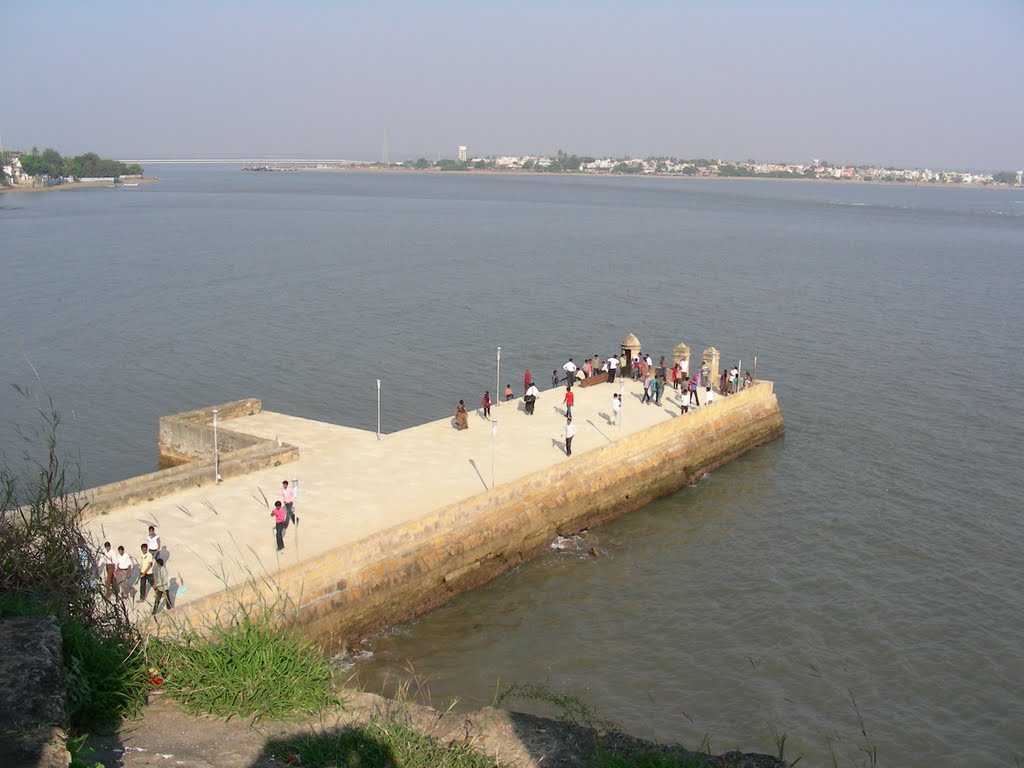
Daman and Diu Tourism is a significant part of the economy of Daman and Diu, a picturesque union territory that is surrounded on one side by the Gulf of Cambay. Basking prettily in the southern fringes of Gujarat, Daman and Diu has plenty to offer its tourists. Bordered by coconut groves, the rocky and sandy terrains of Daman and Diu boasts of a history that dates back to antiquity. In fact, the picturesque union territory is a treasure trove of natural delights. The majestic, crenelated fort of St. Jerome, the venerable Jain Temples, the medieval Se Cathedral and the fascinating Church of Our Lady of Rosary whose walls illustrate some stunning Portuguese sculptings as some of the must see destinations in the panoramic union territory.
Tourists visiting Daman and Diu can also go for a quick weekend trip to the Satpura Hills. The more adventurous and fun loving tourists can also revel in the gala celebrations of the annual Nariyal Purnima and also participate in the thrilling boat races and the swimming competitions. The virgin terrains of Daman and Diu open up a treasure trove of natural delights for tourists. The spellbinding charm of the Diu Island where the imposing Diu Fort stands tall and stately, the pristine churches and the pretty as picture satellite village of Fudam enrapture travellers and sightseers from all across the world. The splendid beaches of Daman and Diu, a mind blowing cocktail of the sun, sea and the sand are another major tourist attraction.
Society and Culture:

People, culture, festivals and fairs are an important part of the social life of this union territory. The sociocultural life here has a multi-faceted character as this region used to be a Portuguese colony at one point of time. Its cultural life represents a blend of European, tribal and India elements. The festivals and fairs of the region are celebrated with pomp and grandeur. Music and dance are integral parts of the socio-cultural life of Daman and Diu.
The traditions and customs of the locals are very much similar to Gujarati traditions. The people here share a striking similarity with the people of Gujarat state. Daman and Diu is dominated mostly by Hindus and the predominant language in the state is Gujarati.
Daman and Diu-
people, culture, festivals and fairs is an important part of the social life of the union territory. The socio-cultural life of Daman and Diu has multi-faceted character as this region used to be a Portuguese colony at one point of time.
The cultural life of Daman and Diu represents a blend of European, tribal and Indian elements. The festivals and fairs of the region are celebrated with pomp and grandeur. Music and dance are integral parts of the socio-cultural life of Daman and Diu.
The people of Daman and Diu are mostly Hindu by religion, though there are also some Christians and Muslims in the region. The prominent language that is in use in the territory is Gujarati. The rate of urbanization is quite high in this part of India in comparison to the entire country. The majority of the social customs and rituals are Related to the Hindu religion.
The people belonging to Daman and Diu take part in a number of well known festivals. Two major festivals of the place are Garba Festival and Folk Dance Festival. The young generation of the region participate in the Garba Festival. They dance wearing gorgeous dresses.
The Folk Dance Festival is a very significant part of the cultural life of Daman and Diu. The dance forms associated with the Folk Dance Festival in Daman and Diu are Mando Dance, Verdigao Dance and Vira Dance People of all age-groups take part in the Folk Dance Festival.
Education:

The literacy rate of this union territory is 87.07%. There are many schools, high schools and government institutions that offer education. Coast Guard Public School in Nani Daman, Sarvajanik Vidyalaya in Nani Daman, institute of Our Lady of Fatima located in Moti Daman and Shri Macchi Mahajan High School in Nani Daman are few of the popular schools here. The Daman College offers all the necessary educational facilities.
Tourism of Daman and Diu:

In Daman, one can visit the Fort of St. Jerome at Nain Daman, where there is a Jain temple as well. The 17th century-old Se Cathedral and the Church of Our Lady of Rosary in Moti Daman are also worth a visit and one can see the exquisite Portuguese carvings on the walls of these churches. Built in ancient Gothic style, these are a feast for the eyes. The stately Light House, the amusement park and the Gandhi Park at Daman jetty are also places of interest. Among the beaches, Devka beach is the most famous. Others include the Jampore beach, which is of interest to the swimmers and is very near the Gujarat border. The lake garden of Satya Nagar Udyan is famous for its fountains and promenades. In Diu, the Zampa Gateway is of particular interest. It has carvings of lions, angels and a priest and has a chapel inside with an inscription dating back to 1702. The artificial Zampa waterfall is also attractive. St. Paul’s Church is the only active church till date. Nearby is the old St. Thomas’s Church that has now been taken over by the authorities and converted into the Diu Museum. The Church of St. Francis of Assisi has been converted to a hospital. The Marwar memorial commemorates the victory over the Portuguese. The massive fort built in 1541 is now weathered and weak. It is of major tourist interest. Other tourist attraction is the Gangeshwar temple.
The Nagoa beach is the most famous in Diu. Gomptimata, Chakratirth and the beautiful Sunset Point are the other famous beaches. The Jama Masjid is also famous; important tourist places in Daman are devka beach, Jampore beach, Kachigam Tank, Satya Sagar Udhyan, Dalwada, Kadaiya Pond, Nani Daman Jetty Garden, old churches, forts, light house and summer house, Jallandhar beach, Nagaon Beach and Children’s Park at Ghoghla are some of the tourist centres in Diu.
Transport Daman and Diu can be easily accessed by air and road. Daman is connected to most of the cities in India through and strong air network. Most of the domestic and international airlines operate flights to Daman and Diu. Daman and Diu does not have its own railway station, however the nearest railway stations are in Vapi and veraval in Gujarat. Daman and Diu also have a well defined road network. The group of islands is connected extremely well with Gujarat, Mumbai and Goa. There are regular buses that ply from many cities in Gujarat to Daman and Diu.