
DELHI METRO

DELHI AIRPORT

DELHI BOOKFAIR

DELHI BUS

DELHI DAREDEVILS

DELHI FOOD

DELHI RAILWAY STATION
DELHI TRAFFIC
DELHI WINTER
TOURIST ATTRACTION
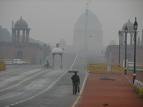
 India Gate, Delhi: the 42 metre high, free standing arch, popularly known as India Gate, was designed by Luytens and built in 19111. It was originally called All India War Memorial in memory of the 90,000 Soldiers of the Indian Army who died in World War I. The names of the soldiers are inscribed all along the walls of the arch. In1971, an eternal flame was lit here to honour the Amar Jawan (immortal soldiers).
 Purana Qila (Old Fort), Delhi : the ruins of the fort are located on a small hill which once stood on the banks of the river Yamuna. Legend has it that the fort marked the site of Indraprastha,, the magnificent capital of the Pandavas, though the construction was carried out by Sher Shah Suri sometime between 1538 to 1545 AD. The structure houses a mosque which has a double storeyed octagonal tower. It is said that the Mughal king Humayun fell from the tower and died. At the foot of the hill is a lake where the Delhi Tourism has arrangements for boating.
 Jantar Mantar, Delhi : Within Connaught Place is the Jantar Mantar Observatory built by the Rajput King of Jaipur Sawai Jai Singh in 1724. It was believed to have been built with masonry instruments for observing the movements of the stars and planets.
 Humayun's Tomb, Delhi : Taj Mahal is known have been inspired by Humayun's Tomb, and in many ways this magnificent red and while building is as spectacular as the famous Taj Mahal in Agra. Tomb is memorial by a grieving wife and was built by his widow Haji Begum in 1565-66, nine years after his death.
The splendor of this grand monument becomes overpowering on entering through the lofty double storeyed gateway. It is set in the centre of a large square garden enclosed by high walls on three sides, while the river would have been the forth boundary. The Chahar Bagh is divided into smaller squares by pathways as in a typical Mughal garden. The fountains were worked with simple yet highly developed engineering skills quite common in India during that period. Chandni Chowk, Delhi : It was the eyes and ears of the Mughal's commercial instincts and is today one of the country's best known wholesale markets for textiles, electronic goods and many other items. The entire area was designed by Jahanara Begum, Shah Jahan'' favorite daughter and was then inhabited by the well-to-do families of the time. In today's time, this area is highly congested.
 Safdarjang's Tomb : It is the last enclosed garden tomb in Delhi in the tradition of Humayun's Tomb though it is far less grand in scale. It was built in 1753-54 as the mausoleum of Safdarjang, the viceroy of the Awadh under the Mughal Emperor, Mohammed Shah. It has several smaller pavilions.
 Parliament House, New Delhi : A marvelous piece of architecture which can be admired only from outside on account of security restrictions. Close to President's House, it is circular structure almost a kilometer in circumference, and was designed by the famed architect Luytens. It is the seat of Indian Parliament
Rashtrapati Bhawan (President's House) : The official residence of the President of the country, the building was also designed by Luytens. It was the official residence of the Viceroy when the British ruled India. With 340 rooms and an area of about 330 acres. The Mughal Gardens within the complex are a treat for the eyes and are open to public during certain periods of the year
 Birla Mandir (Laxmi Narayan Temple), New Delhi : It was built by the industrialist Raja Baldev Birla in 1938. The temple is an important prayer centre and contains idols of several deities. Interestingly, Mahatma Gandhi, who inaugurated the temple, was also a regular visitor to it.
 Akshardham Temple : Representing the Hindu mythology and the Indian culture, the Akshardham Temple stands on the banks of river Yamuna, covering an area of 100 acres. This modern-day wonder boasts 234 embellished pillars, 20,000 statues and a number of arches. The temple complex houses an IMAX theatre, exhibition halls and musical fountains. Surrounded by beautifully laid out garden, the temple attracts lakhs of tourists from far and wide. The temple is built in marble and red sandstone, symbolising devotion and eternal peace.
 Red Fort : Built by the Mughal emperor Shah Jahan between 1638 and 1648, the masterpiece of Red Fort has the distinction of being chosen as a site from where the prime minister of India addresses the nation on the Independence Day. Popular as Lal Quila, the grand and imposing fort is today a regular haunt of tourists from all parts of the world. The unparalleled architecture is testimony to the grandness of supremacy of Mughal empire in India. The complex houses Diwan-i-Am, Diwan-i-Khas, the Moti Masjid, the Shahi Burj etc. The fort stands as dignified and grandiose as it did centuries ago.
 JAMA MASJID, DELHI : The country's largest mosque where thousands of Muslims offer prayers every day. It took over 14 to complete and was built in 1656. It lies opposed the Red Fort. The flight of stairs and its large courtyard are marvels of architecture. It has three gateways, four angle towers and two minarets standing 40 metres high and constructed of alternating vertical strips of red sandstone and white marble. Broad flights of steps lead up to the imposing gateways. The eastern gateway was originally only opened for the emperor, and is now only open on Fridays and Muslim festival days.
 QUTUB MINAR, DELHI : This magnificent structure in the southern part of the capital was built by the Muslim King, Kutab-ud-din Aibak in 1199 AD. A part of it which could not be finished by completed by another Muslim King, Iltutmish. In 1368, Feroz Shah Tughlaq rebuilt the top storeys and added a cupola. An earthquake brought the cupola down in 1803 and an Englishman replaced it with another in 1829 but was removed some years later. Minar(tower)is 72.5 metres high and tapers from 15 meter-diameter base to just 2.5 meter at the top. The tower has given distinct stories, each marked by a projecting balcony. The first three stories are made of red sandstone, the fourth and fifth of marble and sandstone.
At the foot of the Qutab Minar stands the first mosque to be built in India, the Might of Islam Mosque. Qutab-ud-din began construction of the mosque in 1193, but it has number of additions and extensions during the years.
 BAHAI TEMPLE : Lying to the east of Siri is this building shaped like a lotus flower. Built between 1980 and 1986, it is set amongst pools and gardens, and adherents of any faith are free to visit the temple and pray or meditate, according to own religion and faith.